

26 September 2026
British flowers in October: what's actually in season
What is genuinely British-grown in October, what is quietly imported, and the three arrangements I'm making this month in my Epsom studio.
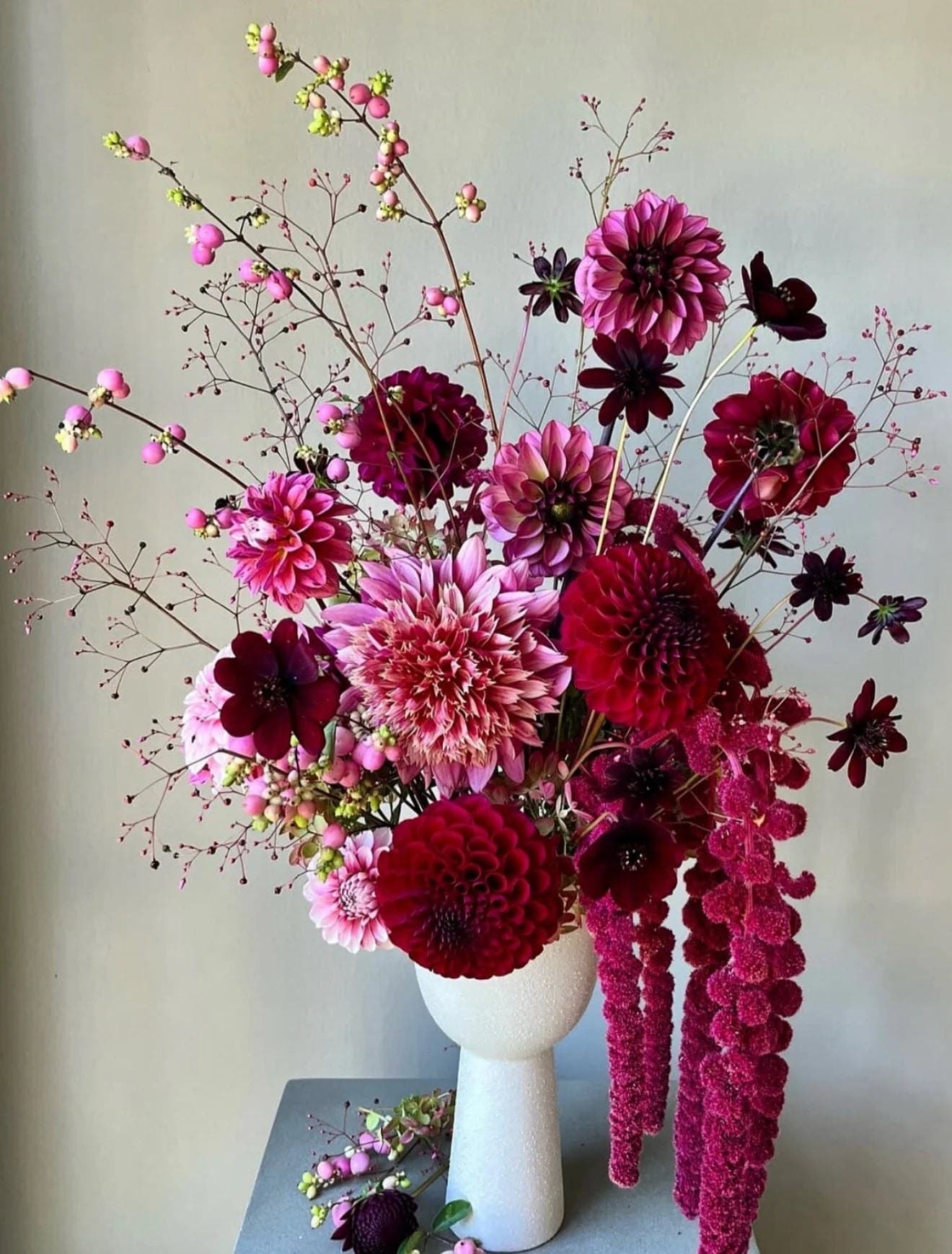
In October, the British-grown list is still generous: dahlias, chrysanthemums, nerines, asters, amaranthus, sedum, celosia and late cosmos, alongside hydrangeas turning antique and a great deal of berry, seedhead and turning foliage. Roses, ranunculus, lisianthus and anything tropical are almost certainly imported this month, whatever the label says. Frost ends the dahlias, and in Surrey that usually happens between late October and mid-November.
The first week of October is my favourite week of the year to buy flowers, and I say that as someone who spends most of February quietly furious.
Everything arrives already interesting. The dahlias are enormous and slightly past their best in a way that suits them. The hydrangeas have gone the colour of an old book. There are seedheads and berries and grasses, and none of it needs me to do very much. My job in October is mostly to stay out of the way.
I came to English seasons late, which is part of why I started this journal, and "in season" has become a word florists use loosely, so here is the honest version: what is genuinely growing in this country in October, what is not, and what I am actually putting in Surrey homes this month.
What is genuinely British-grown in October
These are the stems a British grower can cut this month (the RHS and Flowers from the Farm growers' network are the places to check), in a normal year, without heat or artificial light.
- Dahlias: The month's centrepiece, until the first frost. 'Café au Lait', 'Labyrinth', 'Karma Choc'
- Chrysanthemums: Not the supermarket kind. British bloom chrysanths in bronze, rust and a strange soft green are among the best-value stems of the year
- Nerines: Nerine bowdenii: improbable pink, arrives just as everything else fades
- Asters / Michaelmas daisies: Small, mauve, useful for air and movement
- Amaranthus: Both the trailing and upright forms, in oxblood and green
- Sedum: Flat, matte, dusty pink. Excellent structure
- Celosia: Velvet texture, coral to burgundy
- Cosmos and zinnias: Hanging on until frost; ask before you plan around them
- Hydrangeas: Now in their antique phase: green, rust, bruised pink. Dry beautifully
- Rudbeckia, scabious, cornflower: Late flushes, weather permitting
- Berries and seedheads: Rosehip, crab apple, hypericum, physalis, honesty, teasel
- Grasses: Panicum, miscanthus, pennisetum, the reason October arrangements move
- Foliage: Copper beech, oak, ornamental kale, eucalyptus, smokebush
What is almost certainly imported, even in October
This is the part most seasonal guides skip.
Roses are imported nearly all year: Kenya, Ecuador, or the Dutch auction. There are British rose growers and they are wonderful, but their season is summer, and by October they have largely stopped. Ranunculus that appear now have come early from Italy. Lisianthus, gypsophila, orchids and anything described as "exotic" are imported. So are peonies, which do not exist in Britain in October under any circumstances; the ones that appear from November onwards have flown from New Zealand or Chile.
None of this makes those flowers wrong. It makes them imported, which is a different thing, and worth knowing when someone is charging you a premium for "seasonal British flowers".
So what does "seasonal" actually mean?
Seasonal means the flower could be cut outdoors, in this country, in this month, without being forced. That is the only definition that means anything. A stem grown in a heated Dutch glasshouse in October is available, but it is not seasonal, and the distinction is the whole point.
October is the month when most of what I put in an arrangement can honestly be British. In February that share falls off a cliff, and I would rather tell you that now than let you assume I am buying British in an English January. Nobody is.
What I'm actually making this month
Three things, over and over.
The low, wide one. Dahlias and chrysanths sitting deep in a footed bowl, with grasses coming out sideways and a bit of copper beech for weight. It is the arrangement for a table you actually eat at, because you can see over it.
The single-variety one. Fifteen stems of one chrysanthemum in a straight-sided vase. It costs less than people expect, lasts a fortnight, and looks considered rather than expensive. If you buy one thing this October, buy this.
The dry-as-it-goes one. Hydrangeas, amaranthus, honesty and grasses, arranged in an inch of water and then simply left. Over three weeks it dries in place and becomes a different arrangement. This is the only kind of drying I genuinely recommend.
The honest limit
October flowers do not travel well and they do not sit about.
Dahlias in particular are thirsty, bruise if you look at them, and can go over in a warm room in three days. If your flat has the heating on and a south-facing window, buy chrysanthemums and nerines instead, and save the dahlias for the week you have people coming. I have had to say this to clients who wanted dahlias for a fortnight-long installation, and the conversation is easier before the flowers arrive than after.
The second limit is the frost. Everything in the dahlia and cosmos column disappears within days of the first hard one. In Surrey that usually comes somewhere between late October and mid-November, a little earlier on the Downs and in low, open ground than in town, but it is a date nobody controls. If you are planning anything for late autumn around a specific flower, build in an alternative. Any florist who promises you dahlias on 20 November is promising you imported ones.
Frequently asked
What flowers are in season in the UK in October?
Dahlias, chrysanthemums, nerines, asters, amaranthus, sedum, celosia, late cosmos and zinnias, rudbeckia and scabious, plus hydrangeas in their antique phase. October is also the best month of the year for berries, seedheads and grasses: rosehip, hypericum, physalis, honesty, teasel and miscanthus.
Are dahlias still available in October?
Yes, and October is one of their strongest months in Britain. They continue until the first hard frost, which in Surrey typically falls between late October and mid-November. After that, any dahlia you are offered has been imported. Their vase life is short, around five days, so buy them for a specific week rather than a long display.
Is it cheaper to buy seasonal flowers?
Usually, yes. British chrysanthemums and dahlias in October cost less than imported roses of similar quality, because they have not been flown in or held in cold storage. The saving is real but modest; the bigger differences are freshness and vase life, which is where seasonal flowers genuinely win.
What is the difference between British-grown and locally sourced?
"British-grown" means the stem was grown in the UK. "Locally sourced" has no agreed definition and is often used to describe flowers bought from a big wholesaler, which imports most of its stock. Ask which, specifically. A grower's name is the only answer worth anything.
Can I dry October flowers at home?
Some of them, very easily. Hydrangeas, amaranthus, honesty, grasses, physalis and statice all dry well. Leave them in a vase with about an inch of water and let the water run out rather than hanging them in a dark cupboard. Dahlias, chrysanthemums and anything with a fleshy stem will not dry; they collapse.
October is a short month for flowers. The frost decides when it ends, not the calendar, and there is something clarifying about buying things that are genuinely going to stop.
If you'd like the month's best stems arriving without you having to think about it, that's what The Study subscription is for.
Written by Javi Troncoso, founder of Hana Blossom. Arranging flowers since March 2019, now from my studio in Epsom, Surrey.